




What HVAC Technicians Check During an Annual AC Service Visit
Request FREE Estimate

Once you submit, we may reach out to you via phone, email, or text to fetch information, which you can opt out of at any time. We will never share your personal information with third parties for marketing purposes. Consent is not a condition of purchase. Message/data rates apply.
Terms and Conditions | Privacy Policy
What HVAC Technicians Check During an Annual AC Service Visit
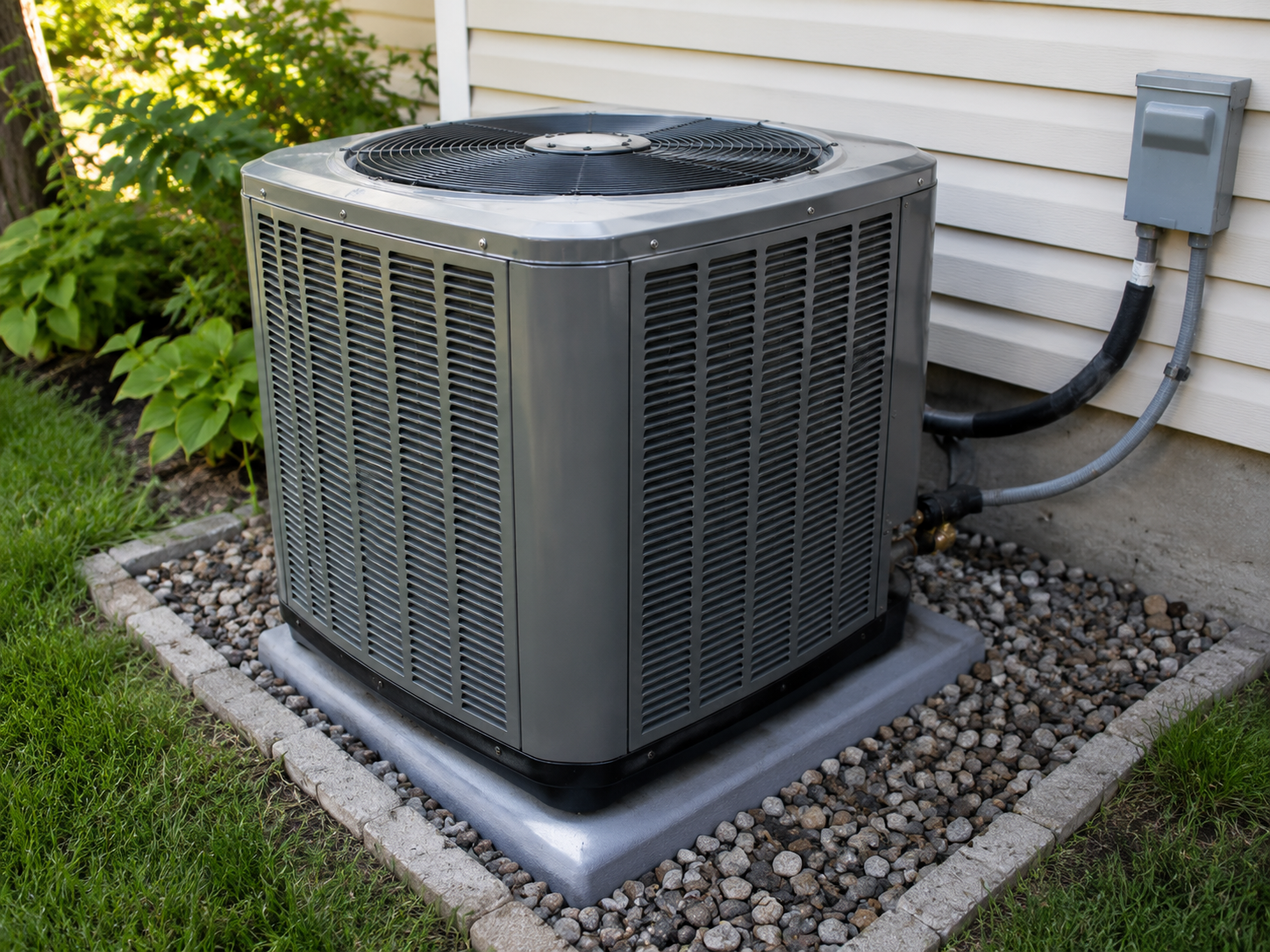
Nobody thinks about their air conditioner until it quits on the hottest day of the year, and by then it’s usually too late for anything but an emergency call. That’s the whole point of an air conditioning service checklist, really. It catches the small stuff before the small stuff turns into a five hundred dollar problem. A technician walking through your home once a year isn’t just topping off refrigerant and heading out the door. There’s a lot more going on than most people realize, from checking wiring for hot spots to measuring how well your ductwork is actually moving air. And honestly, once you understand what’s being checked, you start to see why some systems run for fifteen years while the neighbor’s unit dies at year eight, and it usually isn’t luck. Weather down here doesn’t do units any favors either, so skipping a year adds up faster than people expect. Here’s what actually happens during that visit, step by step.
1. Refrigerant Pressure Gets Checked First
This is usually where a tech starts, and for good reason. Refrigerant pressure tells you almost everything about how the system is performing internally. If it’s low, there’s a leak somewhere, and that leak needs tracking down before more refrigerant gets added, otherwise you’re just paying to refill a hole. A lot of the crews doing HVAC Services in West Palm Beach, Florida, use gauge readings alongside temperature checks to make sure the unit’s actually pulling heat out of the air the way it’s supposed to. Skip this step and you might not notice anything’s wrong until July, when the compressor finally gives up from working too hard for too long. By then you’re not looking at a small fix, you’re looking at a replacement, and that’s a very different phone call to make.
2. Wiring and Electrical Parts Get a Close Look
Capacitors fail more often than people think, and when they do, the compressor has to strain harder just to start up. That strain shortens the life of the whole unit, not just the part that failed. Techs check voltage on the major components, tighten anything that’s come loose from vibration over the year, and look for scorch marks on contactors, which is basically an early warning sign of bigger trouble ahead. Folks who call for Cooling Services in West Palm Beach, Florida, are often surprised to learn a ten dollar part swap during a routine visit saved them from a much bigger repair bill later. Insulation on the wiring gets a glance too, since heat breaks it down slowly over the years.
3. Coils Get Cleaned and Airflow Gets Measured
An AC unit with dirty coils has to run longer to hit the same temperature, which is one of those quiet problems that just eats away at your energy bill without anyone noticing. So the coils, both the evaporator and the condenser, get cleaned of dust, pollen, and whatever else has built up. Airflow at the vents gets checked too, because a clogged filter or a crushed section of ductwork can choke a system even when the coils themselves are spotless. This is exactly the kind of thing homeowners looking into Residential Air Conditioning Services ask about most, usually right after opening a summer power bill that made them wince. Clean coils and clear airflow together take a lot of pressure off the blower motor, and honestly it’s one of the cheapest fixes that makes the biggest difference.
4. Thermostat Calibration and Cycle Testingr
A thermostat that’s off by even a couple degrees throws everything out of whack, either running the system longer than it needs to or shutting it off before a room’s actually cool. Techs check the reading against a separate thermometer and watch how the whole cycle plays out from start to finish. If the unit’s turning on and off too quickly, something called short cycling, that usually points to an oversized system or a sensor that’s starting to fail. Anyone getting Professional HVAC Solutions done at their home will usually get walked through their programmable settings too, since half the time the schedule’s set wrong and nobody’s ever noticed. Honestly, this step alone often fixes the comfort complaints homeowners have been living with for months.
5. Ductwork and Overall Efficiency Get Reviewed
If one room always feels warmer than the rest, ductwork is usually the culprit, and a leaky duct can waste a shocking amount of cooled air before it ever reaches a vent. Techs check what sections they can reach for gaps, loose joints, and insulation that’s worn thin or gotten chewed up by pests over time. They’ll also compare how much energy the system’s using against what it’s supposed to use, which tells you whether the equipment is still running close to spec or has drifted way off. Blower speed gets a check here too, since the wrong setting quietly wears down parts that would otherwise last years longer. By the end of this step, you’ve got a full picture of how the system’s actually performing, not just how it sounds.
Conclusion
So that’s the real rundown, not the five minute version some companies rush through just to check a box. A yearly visit like this touches nearly every part of the system that can fail, and catching problems here is a fraction of the cost of catching them mid summer when everyone’s booked solid. Most breakdowns don’t happen out of nowhere. They build up quietly over months, sometimes years, until one hot afternoon it all comes to a head. Getting this done before the real heat arrives just makes sense, both for your wallet and your sanity. A unit that’s been properly looked after runs quieter, cools faster, and honestly just lasts a lot longer than one that’s been ignored. Spend the hour now, and you probably won’t be spending an afternoon on the phone with an emergency line come August.
Don’t wait for a breakdown. Call us, Comfortly Air Conditioning, at 561-786-8622 and get your AC checked before summer hits hard.
Local HVAC FAQs Expert Answers, Local Insights
Q1: How often should I get my AC serviced in West Palm Beach, Florida?
Once a year is the standard, and spring is usually the best time to get it done before the real heat kicks in. Older units or ones running constantly might need a second look partway through summer.
Q2: What does an AC tune up include in West Palm Beach, Florida?
It covers refrigerant pressure, the electrical parts, coil cleaning, thermostat calibration, and a look at your ductwork and airflow. Basically, it's a full checkup on everything that could quietly go wrong.
Q3: How much does AC maintenance cost in West Palm Beach, Florida?
It really depends on the unit's age and whether anything needs replacing during the visit. Either way, it's almost always cheaper than an emergency repair or having to replace the whole system early.
Customer Reviews
Reliable AC Repair in Palm Beach County, FL

Get Started with Comfortly Air Conditioning
Stay cool and breathe better with expert air conditioning and indoor air quality solutions. Schedule your consultation today.